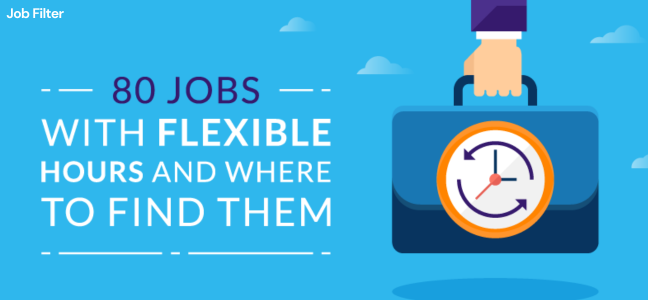
The traditional 9-to-5 office routine isn’t the only path to a successful career. More than ever, workers are seeking—and finding—jobs that offer flexibility. Whether you’re looking for fully remote roles, flexible hours, or project-based freelance work, the landscape of work is evolving to accommodate diverse lifestyles and needs.
What is a Flexible Job?
A flex job is a role with adaptable terms, which can mean flexible hours, remote or hybrid location, or an adjustable weekly schedule. These jobs are designed to fit different employee needs without sacrificing output . The rise of remote work and digital tools has made flexible work increasingly common across many industries .
The Growing Demand for Flexibility
The demand for flexible work is overwhelming. According to FlexJobs data, 85% of professionals say remote work is the biggest factor that would make them apply to a job—even ahead of competitive pay and benefits . This shift has led companies to offer flexible arrangements to attract and retain top talent .

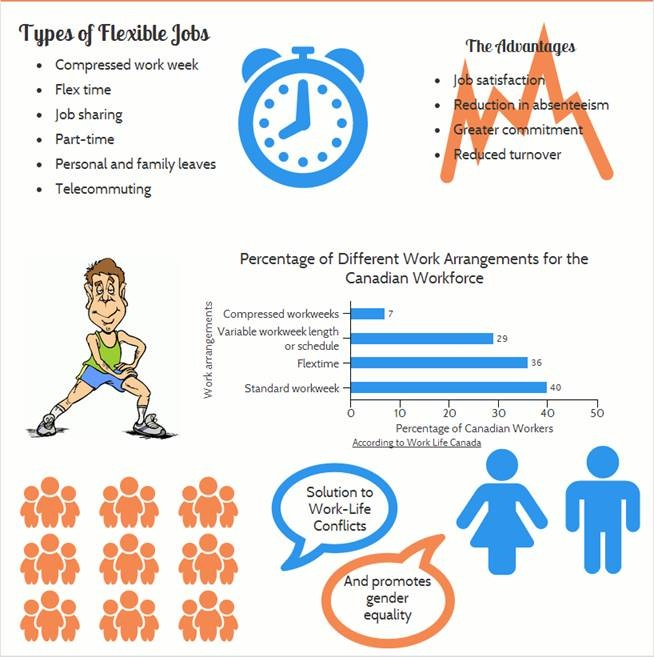
Types of Flexible Work Arrangements
Flexible work comes in several forms, each offering different levels of freedom:
Remote Work
Workers perform their job responsibilities entirely from home or any location outside a traditional office. While fully remote jobs are competitive, they are growing fastest in fields like engineering, banking, sales, HR, and nursing .
Flexible Hours
Employees still work a full-time workload but have more control over when those hours happen. Rather than working eight hours every day, you might work four hours one day and nine the next, or take a weekday off and make up the time later . Some companies require availability during “core hours” (e.g., 10 a.m. to 3 p.m.) for meetings and collaboration .
Freelancing
Independent contract work with control over projects and hours. Freelancers set their own schedules and choose which projects to accept .
“Microshifting”
A growing trend where workers tackle job duties in short, productive bursts throughout the day rather than in a single stretch. Tasks are performed around personal responsibilities, and performance is judged primarily by output rather than hours logged .
Compressed Workweek
Longer working days over fewer days, such as four 10-hour shifts .
Job Sharing
Two employees split one full-time role .
Fastest-Growing Fields for Fully Remote Work
A 2025 FlexJobs report identified these 15 career fields as seeing the fastest growth in fully remote job postings (each showing at least 19% growth) :
- Engineering Jobs
- Administrative Jobs
- Sales Jobs
- Client Services Jobs
- Banking Jobs
- Social Media Jobs
- Mental Health Jobs
- Insurance Jobs
- Operations Jobs
- Nursing Jobs
- Legal Jobs
- Account Management Jobs
- Education & Training Jobs
- Communications Jobs
- HR & Recruiting Jobs
Popular Flexible Careers by Category
Entry-Level and Beginner-Friendly Roles
You don’t need years of experience to find flexible work. Many roles welcome beginners with basic computer skills and a willingness to learn :
Virtual Assistant (VA)
VAs handle tasks like calendar scheduling, email management, research, or basic bookkeeping. The flexibility allows you to specialize in tasks you enjoy. Many beginners start on platforms like Fiverr or Upwork, earning $10 to $25/hour. Long-term contracts are common for reliable performers .
Data Entry Clerk
One of the most accessible remote jobs, data entry requires typing accuracy and attention to detail. Tasks involve updating spreadsheets, entering customer data, or handling internal records. Average pay ranges from $12 to $22 an hour .
Customer Support Representative
This role involves handling customer inquiries via phone, live chat, and email for companies in healthcare, finance, tech, and retail. Most jobs pay $15 to $22 an hour and require only a quiet space, reliable internet, and basic computer skills. Training is typically provided .
Remote Scheduling Assistant
Scheduling assistants coordinate details, manage schedules, and handle confirmations for clients. These fully remote positions offer flexible hours and often require no prior experience—training is provided .
Freelance and Creative Roles
For those who want complete control over their work, freelance roles offer maximum flexibility :
UX Researcher
UX researchers study how people interact with websites or apps. The work is insight-driven rather than hour-based, making it naturally flexible .
Digital Archivist / Media Curator
This role involves cataloguing and reviving historical content like films, audio, articles, and photographs. Most work remotely for organizations needing digital access to archives, often without fixed login hours .
Virtual Production Assistant
Content creators often need help coordinating calendars, preparing captions, or managing brand emails. These roles are flexible by nature and adapt to the creator’s work rhythm .
Healthcare and Education Roles
Healthcare and education fields frequently offer flexible schedules :
Online Tutor
Tutoring platforms like Cambly and Preply connect educators with students over video. Pay ranges from $10 to $30/hour, and you can work part-time, at night, or on weekends. No teaching license is required for many platforms .
Health and Wellness Roles
Physical therapists, counselors, dietitians, and fitness professionals can tailor their hours to patient or client needs .
Tech and Corporate Roles
Many major organizations now offer flex hours across departments, including marketing, IT, HR, and sales .
AI Training & Data Labeling
AI companies hire remote workers to “train” algorithms by evaluating content, labeling images, or correcting grammar. Companies pay $10–$25/hour with no interviews or resumes required .
Business Development Representative
Remote BDR roles involve B2B lead generation and outbound outreach. These positions are often part-time with high earning potential through performance-based incentives .
Understanding the Work-From-Anywhere Market
True “work-from-anywhere” (WFA) roles—jobs with no geographic restrictions allowing employees to work from any country or time zone—are rare. Only 5% of all remote job postings in 2025 qualified as genuine WFA positions . These roles are also highly competitive, with 77% requiring experienced professionals and only 3% being entry-level . Common WFA titles include tech- and digital-driven positions like software developers and project managers .
Pros and Cons of Flexible Work
Advantages
- Better work-life balance: Manage personal needs without burning out
- Higher productivity: Workers operate during their most productive hours
- Higher job satisfaction: Trust and autonomy increase commitment
- Lower employer costs: Less office space and fewer on-site expenses
- Better talent access: Hiring is not limited by geography
Disadvantages
- Isolation: Remote workers may feel disconnected from teammates
- Harder collaboration: Different schedules and time zones slow teamwork
- Reduced oversight: Managers find it harder to track day-to-day work
- Less structure: Some employees struggle without a fixed schedule
- Uneven workloads: Some team members carry more during peak hours
- Difficulty disconnecting: Flexible schedules can blur the line between work and personal time
Tips for Landing a Flexible Job
Highlight Your Independence
For remote roles, candidates should show they can “work really effectively as independently as possible with less manager oversight” . Demonstrate your ability to manage your time and deliver results without constant supervision.
Focus on In-Demand Skills
Learn skills relevant to your target field and emphasize your proven impact in prior roles on your resume and in interviews .
Sell the Benefits to Employers
When asking for flexibility, tell employers how they’ll benefit. As one team leader advised: “You have to go into the interview and sell it” . Explain that you work best and are most productive with flexible arrangements.
Start with Entry-Level Roles
For beginners, roles like data entry, customer support, virtual assistance, and transcription are accessible ways to build experience. Many of these positions provide training and allow you to work from anywhere .
Frequently Asked Questions
1. What’s the difference between fully remote and work-from-anywhere jobs?
Fully remote jobs allow working from home but may have geographic restrictions (e.g., must live in a specific country or state). Work-from-anywhere jobs have zero geographic requirements and allow working from any country or time zone. Only about 5% of remote jobs are truly WFA .
2. Can I find flexible work without prior experience?
Yes. Entry-level flexible roles like virtual assistant, data entry, customer support, and online tutoring often require no prior experience and provide training .
3. What fields are seeing the most growth in remote work?
Engineering, administrative, sales, banking, social media, mental health, insurance, operations, nursing, legal, account management, education, communications, and HR roles are the fastest-growing fields for fully remote work .
4. What is “microshifting”?
Microshifting involves working in short, productive bursts throughout the day rather than in a single stretch. Tasks are performed around personal responsibilities, and performance is judged primarily by output rather than hours logged .
5. How competitive are flexible jobs?
Flexible jobs, especially remote positions, are highly competitive. Candidates should highlight their ability to work independently and demonstrate their impact in previous roles .