Project management is one of the most versatile and in-demand career paths today. The role is simple in concept—planning, organizing, and executing tasks to bring a product or service from concept to reality—but it requires a remarkable blend of skills, adaptability, and leadership . With projects now accounting for 20-25% of the global GDP (US$25 trillion) and a global demand for up to 30 million more project professionals by 2035, the field offers both stability and opportunity for growth .
What Does a Project Manager Do?
Think of a project manager as the conductor of an orchestra, orchestrating tasks, timelines, budgets, and resources . Their core responsibility is to guide a project from initiation to delivery, ensuring it is completed on time, within budget, and to the required quality standards .
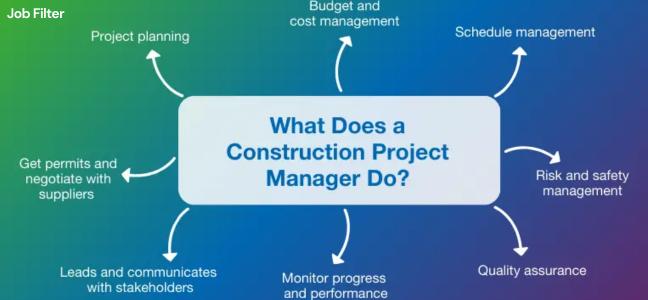
Key responsibilities include :
- Project Planning & Initiation: Defining project scope, objectives, and deliverables. This involves developing detailed project plans, schedules, and budgets, and identifying necessary resources.
- Team Coordination and Leadership: Selecting, leading, and motivating project teams. The project manager coordinates team members, delegates tasks, and ensures everyone remains aligned on goals .
- Execution and Monitoring: Monitoring project progress against the plan and tracking milestones. This includes using project management software (like JIRA, Smartsheet, or Microsoft Project) to keep everything organized .
- Risk and Issue Management: Identifying potential risks and blockers before they become major problems. The PM proactively develops mitigation strategies and resolves issues as they arise .
- Communication and Reporting: Acting as the single point of contact for project status. PMs regularly report progress to senior management and stakeholders, ensuring everyone is informed .
- Budget Management: Keeping the project within financial parameters, tracking expenditures, and managing resources efficiently .
- Project Closure: Evaluating the project’s successes and challenges to enhance learning for future initiatives .
Industries and Job Examples
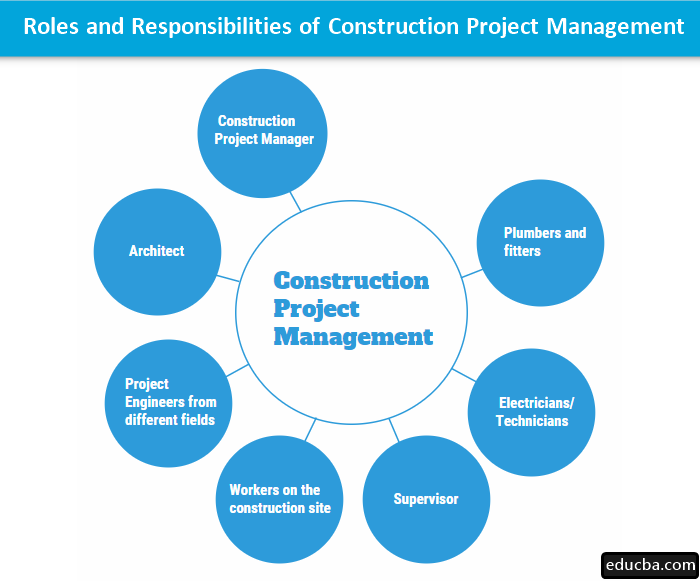
One of the most appealing aspects of project management is its relevance across virtually every sector . Here are a few real-world examples of current project manager roles:
- Senior Project Manager (Technology) – Motive, Pakistan (Remote): This role requires managing high-impact technical projects, driving quarterly planning, and collaborating with engineering, product, and design teams. It involves leading sprint rituals, tracking dependencies, and driving a culture of continuous improvement .
- IT Project Manager (Manufacturing) – Crewe, UK: This position focuses on delivering large-scale IT infrastructure and networking projects within a manufacturing environment. Key responsibilities include managing detailed plans, governance forums, and risks for an organization’s IT transformation .
- Project Manager (Hydropower) – Pakistan: A senior-level role in the energy and construction sector, managing large-scale hydropower and dam projects. This PM represents the consultant team, coordinates with local authorities, funding institutions, and contractors, and oversees the entire project lifecycle. It requires a civil engineering background and extensive industry experience .
Career Progression and Job Titles
Project management offers a clear and rewarding career path, from entry-level support to executive leadership . While exact titles vary by company, a typical progression includes:
| Career Stage | Job Titles | Experience Level | Median US Salary (Approx.) |
|---|---|---|---|
| Entry-Level | Project Coordinator, Associate PM, Project Scheduler | 0-2 Years | $64,600 – $83,300 |
| Mid-Level | Project Manager, Lead PM, Product Owner | 2-7 Years | $100,200 – $120,200 |
| Senior-Level | Senior Project Manager, Program Manager | 7+ Years | $135,000+ |
| Leadership | Director of PM, VP of Operations, COO | 10+ Years | $156,500 – $163,800 |
Note: These figures are estimates and can vary significantly by industry, location, and company size. Certified PMP holders also command a significant salary advantage, often earning 17% to 24% more than non-certified peers .
Essential Skills for Success
To succeed in project management, you need a toolbox of both “hard” and “soft” skills.
Essential hard skills include:
- Project Management Methodologies: Knowledge of frameworks like Agile, Waterfall, and Hybrid is crucial, with Agile and Scrum being particularly valuable in IT and tech .
- Project Management Software: Familiarity with tools like JIRA, Asana, Smartsheet, Confluence, and Microsoft Project is often a prerequisite for managing complex projects .
- Budgeting and Financial Acumen: The ability to manage budgets, track expenditures, and understand the financial implications of project decisions .
- Risk Management: Proactively identifying risks and developing robust mitigation strategies .
“Soft” skills are equally, if not more, important:
- Communication and Interpersonal Skills: The ability to convey complex information simply and clearly is the most fundamental skill. PMs must influence stakeholders, resolve conflicts, and lead teams without direct authority .
- Leadership and Motivation: Inspiring and guiding a diverse team towards a common goal .
- Organization and Time Management: Keeping multiple tasks, deadlines, and people on track .
- Problem-Solving and Adaptability: Navigating challenges, making informed decisions under pressure, and being flexible in the face of change .
Getting Started in Project Management
There is no single path into project management, but here are some common starting points:
- Gain Experience in a Supporting Role: Many PMs start as project coordinators, schedulers, or administrators. These roles provide an opportunity to learn the processes and tools of project management while supporting a lead PM. Starting salaries for these positions can be between £29,000 and £35,000 in the UK and around $85,000 in the US .
- Leverage Industry Expertise: It’s often easier to transition into project management from a technical or functional role in your industry. For instance, a software developer can become an IT project manager by applying their technical knowledge to project planning .
- Pursue a Degree: While a degree in project management is beneficial, it’s not always a requirement. A business degree, or one in your field of interest (e.g., engineering, IT), is a common foundation .
- Consider an Advanced Degree: A master’s degree in project management can equip you with advanced skills and accelerate your career advancement .
Professional Certifications
Professional certifications can significantly boost your credibility, earning potential, and job prospects . The most recognized certifications include:
- Project Management Professional (PMP)®: The gold standard in project management, offered by the Project Management Institute (PMI). PMP certification is a highly sought-after credential that validates your experience and competency. According to PMI’s 2025 Salary Survey, PMP-certified professionals in the US earn a median salary of $135,000, compared to $109,157 for those without certification—a nearly 24% advantage .
- Certified ScrumMaster (CSM): A certification for professionals working in Agile environments, demonstrating proficiency in Scrum principles .
- PRINCE2: A process-based project management methodology widely used in the UK and internationally .
Frequently Asked Questions
1. Is project management a good career path?
Yes. Project management is a stable and financially rewarding career with clear opportunities for advancement. The demand for skilled project professionals is growing globally, with up to 30 million new roles expected by 2035 . It also offers the benefit of working across a wide variety of industries, from IT and construction to finance and healthcare .
2. What is the average salary for a project manager?
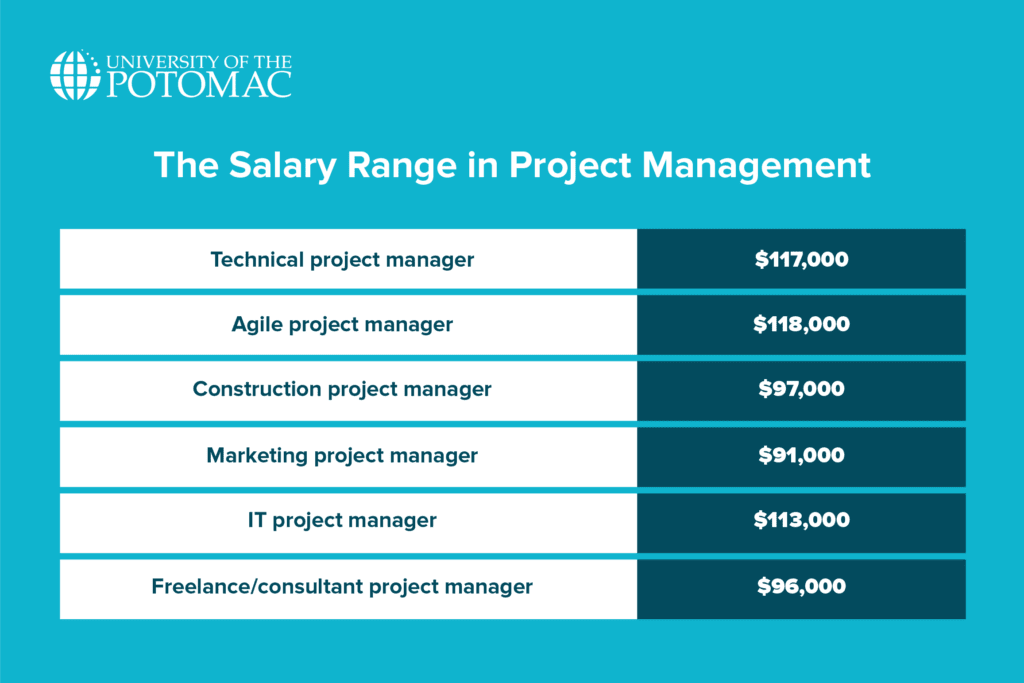
Salaries vary widely by location, experience, industry, and certification. In the US, the median salary for a project manager is around $100,200, with senior professionals earning over $135,000 . PMP-certified professionals earn a significant premium . In the UK, an experienced project manager can earn between £40,000 and £80,000 .
3. What qualifications do I need to become a project manager?
While a degree is not always mandatory, a bachelor’s degree in business, engineering, IT, or project management is common. For many, experience is more critical than formal education. Professional certifications like the PMP, CSM, or PRINCE2 are often preferred or required by employers and can significantly boost earning potential .
4. What is the difference between a project manager and a program manager?
A project manager focuses on the day-to-day execution and successful delivery of individual projects. A program manager coordinates a group of related projects to achieve broader organizational objectives. It is a more strategic role, bridging the gap between project execution and company-wide goals .
5. Is the PMP certification worth it?
For most project managers, yes. The PMP certification is globally recognized and has been proven to lead to higher salaries and better career opportunities. The 2025 PMI Salary Survey found that PMP certification holders earn 17% more on average across 21 countries, with US-based professionals seeing a near 24% salary premium .