Teaching at the college level is more than a job. It is a profession that shapes the future of young adults, contributes to knowledge creation, and offers a stable, respected career path. College lecturer jobs are available in government colleges, private institutions, online universities, and international campuses across the world.
Unlike school teachers who work with children, college lecturers teach specialized subjects to students who have chosen a particular field of study. Whether you are a fresh master’s degree holder or an experienced professor looking for a change, the demand for qualified lecturers continues to grow.
This complete guide covers everything you need to know about becoming a college lecturer. From educational qualifications and salary expectations to interview tips and international opportunities, you will find all the information to start or advance your academic career.
What Are College Lecturer Jobs?
College lecturer jobs are academic positions in which educators teach undergraduate or postgraduate students in higher education institutions. Lecturers typically specialize in one discipline, such as mathematics, English, engineering, business, or computer science.
A lecturer is usually a permanent or contract faculty member who focuses primarily on teaching. Unlike professors, lecturers may have fewer research requirements, though this varies by institution and country.
Key characteristics of college lecturer jobs:
- Teaching specific courses within a department
- Preparing lesson plans, lectures, assignments, and exams
- Grading student work and providing feedback
- Holding office hours for student consultations
- Participating in departmental meetings and curriculum development
- Some positions require research and publication (varies by institution)
In many countries, “lecturer” is an entry-level or mid-level academic rank. In others, it is equivalent to an assistant professor. Understanding the local academic hierarchy is important when applying internationally.
Roles and Responsibilities of a College Lecturer
The daily duties of a college lecturer extend far beyond standing in front of a classroom.
Teaching responsibilities:
- Delivering 10–20 hours of lectures per week (depending on contract)
- Designing course syllabi and selecting textbooks
- Creating PowerPoint presentations, handouts, and other learning materials
- Developing and grading quizzes, midterms, final exams, and assignments
- Providing constructive feedback to help students improve
Student support:
- Holding regular office hours (2–5 hours per week)
- Mentoring students on academic and career concerns
- Writing recommendation letters for graduate school or jobs
- Advising student clubs or academic societies
Administrative duties:
- Attending departmental and faculty meetings
- Serving on academic committees (curriculum, exam, discipline)
- Maintaining accurate student records and grades
- Participating in accreditation processes
Professional development and research (varies):
- Publishing research papers in academic journals (for research-focused roles)
- Attending conferences and workshops
- Pursuing a PhD or other advanced degrees
- Applying for research grants
The balance between teaching, research, and administration depends heavily on the type of institution. Teaching-focused colleges expect 80% teaching and 20% service. Research universities expect 40% teaching, 40% research, and 20% service.
Types of College Lecturer Jobs
Understanding the different types of lecturer positions helps you target the right roles.
| Type | Employment Basis | Teaching Load | Research Required | Typical Contract |
|---|---|---|---|---|
| Full-Time Lecturer | Permanent or multi-year contract | 12–18 hours/week | Minimal or none | 1–5 years, renewable |
| Part-Time Lecturer | Hourly or per-course | 3–9 hours/week | None | Semester by semester |
| Visiting Lecturer | Fixed term (1 semester – 2 years) | 9–15 hours/week | None | Temporary, non-renewable |
| Senior Lecturer | Permanent | 9–15 hours/week | Minimal (pedagogical) | Permanent after probation |
| Assistant Lecturer | Probationary | 12–18 hours/week | None (while pursuing higher degree) | 2–4 years, renewable |
| Online Lecturer | Remote, contract or part-time | 10–20 hours/week (asynchronous) | None | Per course or term |
Full-Time Lecturer
The most common permanent academic teaching position. You are a full employee with benefits, job security, and a predictable schedule. Promotions are possible to senior lecturer or principal lecturer.
Part-Time Lecturer
Also called adjunct faculty. You teach one or two courses per semester. Pay is per course (e.g., $2,000–$4,000 per course). No benefits or job security. Good for supplemental income or gaining experience.
Visiting Lecturer
A temporary position to cover a sabbatical, leave, or specialized course. Often comes with a housing allowance if international. Excellent for experiencing a different academic system.
Senior Lecturer
An experienced educator with 5+ years of service. May mentor junior lecturers, lead curriculum development, or coordinate multi-section courses. Higher pay and reduced teaching load.
Assistant Lecturer
An entry-level role for candidates who have a master’s degree but are not yet qualified to be a full lecturer. Common in developing countries and some European systems. You teach while completing a PhD or gaining experience.
Online Lecturer
Teach courses entirely online, often for for-profit universities or distance education programs. You interact with students via discussion forums, video lectures, and email. Flexible hours but lower pay than on-campus roles.
Educational Qualifications Required
The minimum qualification for college lecturer jobs is almost always a master’s degree in the relevant subject. However, requirements vary by country and institution type.
Minimum qualification (worldwide):
- Master’s degree (MA, MSc, MCom, MEng, etc.) in the teaching subject
- First-class or high second-class grades (typically 60% or 3.0 GPA on a 4.0 scale)
Preferred or required for career advancement:
- PhD or Doctorate in the relevant field
- Postgraduate teaching certificate (PGCHE, Higher Education Certificate)
- Research publications in peer-reviewed journals
Country-specific requirements:
| Country | Minimum Degree | Additional Requirements |
|---|---|---|
| USA | Master’s for community colleges; PhD for universities | Teaching experience, publications for tenure-track |
| Canada | Master’s (colleges); PhD (universities) | Teaching portfolio, sometimes professional certification |
| UK | Master’s (lecturer); PhD (senior lecturer) | Fellowship of Higher Education Academy (FHEA) |
| Australia | Master’s or PhD | Teaching qualifications (Graduate Certificate in Higher Education) |
| UAE | Master’s (min); PhD preferred | Equivalency from Ministry of Education |
| Saudi Arabia | Master’s (min); PhD for most roles | Saudi Cultural Attestation, experience in similar role |
| India | Master’s with NET/SET qualification | PhD mandatory for assistant professor after 2021 (UGC regulations) |
| Pakistan | Master’s (18 years of education) | HEC equivalence, subject test for some roles |
| Philippines | Master’s (min); PhD for university roles | PRC license (Professional Regulation Commission) |
NET/SET (India specific):
The National Eligibility Test (NET) or State Eligibility Test (SET) is mandatory for assistant professor positions in Indian universities and colleges. It is administered by UGC. Without NET/SET, you can only work in private colleges (and even then, many require it).
Skills Needed to Become a College Lecturer
Technical knowledge alone does not make a good lecturer. You need these skills:
1. Subject matter expertise
Deep understanding of your discipline. You must be able to explain complex concepts in simple terms and answer unexpected student questions.
2. Communication and presentation
Clear speaking voice, organized PowerPoint slides, ability to engage a room of 50+ students. You must adapt your communication for different learning styles.
3. Classroom management
Maintaining discipline without being authoritarian. Managing time within a 50-minute lecture. Handling disruptive students professionally.
4. Assessment and grading
Designing fair exams and rubrics. Providing constructive feedback that helps students improve. Managing grading workload efficiently.
5. Empathy and patience
Students struggle with personal issues, learning disabilities, or language barriers. A good lecturer supports them without lowering academic standards.
6. Organization and time management
Preparing 15 weeks of lectures, grading 100+ assignments, attending meetings, and still having time for your own research or family.
7. Technology proficiency
Learning management systems (Moodle, Canvas, Blackboard). Online teaching tools (Zoom, Teams). Gradebook software. Plagiarism detection (Turnitin).
8. Continuous learning
Your field changes. New research emerges. Teaching methods improve. You must keep learning throughout your career.
How to Become a College Lecturer
Follow this step-by-step path:
Step 1: Earn a bachelor’s degree (3–4 years)
Choose a major in the subject you want to teach. Maintain a high GPA (3.5+ on 4.0 scale).
Step 2: Earn a master’s degree (1.5–3 years)
Specialize in your discipline. Aim for first-class marks. Write a strong thesis. Build relationships with professors who can write recommendations.
Step 3: Gain teaching experience (during or after master’s)
- Serve as a teaching assistant (TA) during your master’s or PhD.
- Tutor undergraduate students.
- Teach short courses or workshops at community centers.
- Volunteer to guest lecture in a professor’s class.
Step 4: Clear required exams (country-specific)
- India: UGC NET or SET.
- Pakistan: HEC approved subject test.
- USA: No national exam, but some states require licensing for community colleges.
Step 5: Publish research (for university roles)
Write papers for academic journals. Present at conferences. A publication record distinguishes you from hundreds of applicants.
Step 6: Prepare your application package
- Academic CV (6–10 pages for early career, longer for experienced)
- Teaching philosophy statement (1–2 pages)
- Research statement (if applying to research universities)
- Sample syllabi and teaching evaluations
- 3–5 letters of recommendation
Step 7: Apply for lecturer jobs
Search college websites, academic job portals, and government recruitment boards. Apply widely (20–50 applications is normal).
Step 8: Interview
Expect a teaching demonstration (15–30 minute mock lecture) as part of the interview process.
Step 9: Accept offer and complete hiring requirements
Background check, degree verification, visa processing (for international jobs).
Step 10: Complete probation period (1–3 years)
New lecturers are often on probation. You must receive positive teaching evaluations and meet departmental expectations to earn permanency.
College Lecturer Recruitment Process
The hiring process varies by country and institution type.
Typical stages:
- Job advertisement: Posted on college website, academic job boards, or government portal.
- Application submission: CV, cover letter, teaching philosophy, research statement, publications, references.
- Shortlisting: HR or search committee screens applications. 5–20 candidates are shortlisted.
- First interview (phone or video): Basic screening, salary discussion, availability.
- Teaching demonstration (campus or video): You teach a 15–20 minute mock class to a panel of faculty and students. This is the most important stage.
- Panel interview: In-depth questions about teaching methods, research plans, handling difficult students, and departmental service.
- Reference checks: Your listed references are contacted.
- Job offer (conditional): Subject to background check, degree verification, and (for international) visa approval.
- Negotiation: Salary, start date, teaching load, research support, relocation allowance.
- Final offer and contract signing.
Timeline: 2–6 months from application to start date.
Government college recruitment (India, Pakistan, Bangladesh):
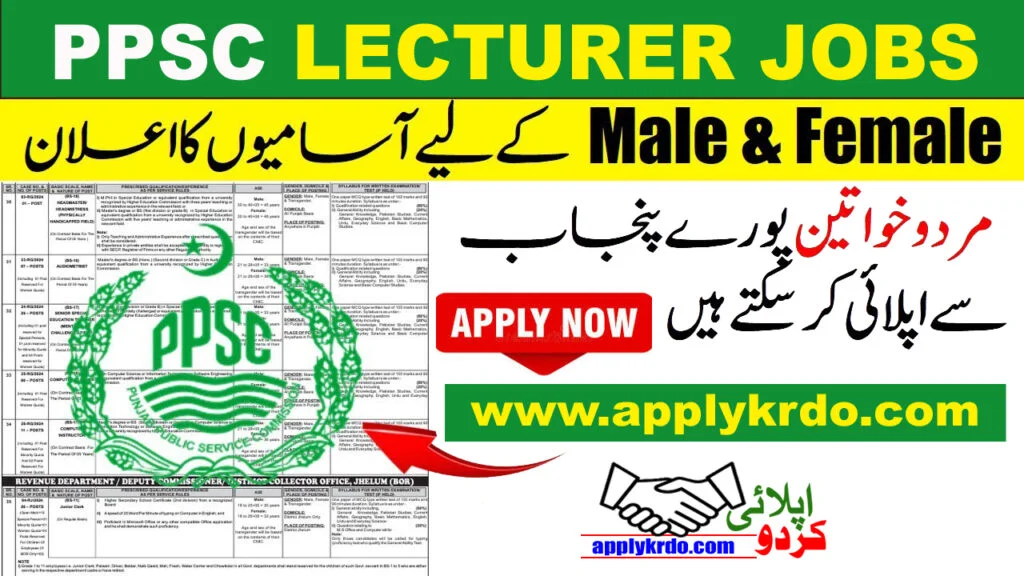
- Conducted by Public Service Commissions (UPSC, PPSC, BPSC, etc.)
- Written exam (multiple choice + essay)
- Interview (viva voce)
- Merit list based on exam + interview + academic record
- Process takes 6–18 months.
Interview Questions and Preparation Tips
Common interview questions for lecturer jobs:
- “Why do you want to teach at our college?”
- “Describe your teaching philosophy.”
- “How do you engage students who are not interested in the subject?”
- “How do you handle a student who challenges your grading?”
- “Tell us about a time you helped a struggling student succeed.”
- “How do you incorporate technology into your teaching?”
- “How do you assess student learning beyond exams?”
- “What is your approach to designing a course syllabus?”
- “How do you stay current in your field?”
- “Where do you see yourself in five years?”
Sample answer (Question 2 – Teaching philosophy):
*”My teaching philosophy is based on active learning. I believe students remember only 10% of what they hear but 70% of what they do. Therefore, each of my 50-minute lectures includes 15 minutes of discussion or problem-solving. I also use real-world examples from my industry experience. For example, when teaching marketing, I have students analyze a local business’s social media campaign. This approach has improved my student evaluation scores from 3.8 to 4.5 out of 5 over three semesters.”*
Teaching demonstration tips:
- Prepare for exactly the time given (e.g., 15 minutes). Do not go over.
- Treat the panel as if they are real students. Ask them questions.
- Use a clear learning objective (state it at the start).
- Include an activity (even a simple think-pair-share).
- End with a summary and a question to check understanding.
- Bring handouts or a simple PowerPoint.
Other preparation tips:
- Research the college’s mission, student demographics, and recent achievements.
- Prepare 3–5 questions to ask the panel (e.g., “What is the typical class size?” “What support is available for new lecturers?”).
- Bring copies of your teaching evaluations (if available).
- Dress professionally (suit or business attire).
College Lecturer Salary by Country
Salaries vary significantly by country, institution type, experience, and qualifications (PhD vs. master’s).
All figures are annual gross salary in USD before taxes.
| Country | Entry Level (0–2 years) | Mid-Career (5–8 years) | Senior (10+ years) |
|---|---|---|---|
| United States | $45,000 – $60,000 | $60,000 – $80,000 | $80,000 – $110,000+ |
| Canada | $50,000 – $70,000 (CAD) | $70,000 – $95,000 (CAD) | $95,000 – $130,000 (CAD) |
| United Kingdom | £35,000 – £45,000 | £45,000 – £60,000 | £60,000 – £80,000+ |
| Australia | AUD 70,000 – 90,000 | AUD 90,000 – 115,000 | AUD 115,000 – 150,000+ |
| UAE | $36,000 – $48,000 | $48,000 – $66,000 | $66,000 – $90,000+ |
| Saudi Arabia | $40,000 – $55,000 (tax-free) | $55,000 – $75,000 (tax-free) | $75,000 – $100,000+ (tax-free) |
| India (government) | $6,000 – $10,000 | $10,000 – $18,000 | $18,000 – $30,000 |
| India (private) | $3,600 – $6,000 | $6,000 – $12,000 | $12,000 – $24,000 |
| Pakistan (government) | $3,000 – $5,000 | $5,000 – $8,000 | $8,000 – $15,000 |
| Pakistan (private) | $1,800 – $3,600 | $3,600 – $6,000 | $6,000 – $10,000 |
Additional benefits (Gulf countries, some US/UK institutions):
- Free or subsidized housing
- Annual flight tickets home
- Health insurance for you and family
- Children’s school tuition allowance ($3,000–$10,000 per child)
- End-of-service bonus (1 month salary per year worked)
Note: In the US, community college lecturers earn less than university lecturers. Adjunct (part-time) lecturers earn $2,000–$4,000 per course, no benefits.
Government College Lecturer Jobs
Government colleges offer job security, pensions, and standardized pay scales. Recruitment is competitive.
How government lecturer jobs work:
India:
- State colleges: Recruited through State Public Service Commission (e.g., UPPSC, MPPSC, BPSC).
- Central universities: Through UGC NET + interview.
- Pay scale: Level 10 (7th Pay Commission) – starting ₹57,700/month (~$690) plus allowances.
Pakistan:
- Government degree colleges under provincial governments (Punjab, Sindh, KP, Balochistan).
- Recruited through PPSC, SPSC, KPSC, BPSC.
- Pay scale: BPS-17 or BPS-18 (starting PKR 60,000–80,000/month ~ $210–$280).
Bangladesh:
- Government colleges under Bangladesh Public Service Commission (BPSC).
- Pay scale: Grade 9 (starting BDT 35,000–50,000/month ~ $320–$450).
Advantages of government jobs:
- Pension after retirement (lifetime monthly income)
- Medical benefits for family
- Job security (cannot be fired without due process)
- Regular promotions based on seniority and training
Disadvantages:
- Lower salaries than private/Gulf sector
- Slow promotions (5–10 years for next rank)
- Bureaucracy and politics
- Limited international mobility
How to apply:
Monitor your country’s Public Service Commission website. Apply when advertisements are released (once or twice per year). Prepare for written exams.
Private College Lecturer Jobs
Private colleges offer higher salaries (in some countries) but less job security.
Advantages of private colleges:
- Higher starting salaries (India: ₹30,000–₹60,000/month vs. government ₹57,700)
- Faster promotions (based on performance, not seniority)
- Modern facilities and technology
- More autonomy in teaching methods
- Opportunity to teach specialized or industry-focused courses
Disadvantages:
- No pension (only provident fund)
- Contract renewals year to year (no permanency)
- Higher workload (teaching, administrative tasks)
- Less research support
Private college recruitment:
- Direct application to the college (email HR or apply via website).
- Interview and teaching demonstration only (no written exam).
- Process is faster (2–8 weeks).
Top private college chains (India):
- Amity University
- SRM Institute of Science and Technology
- VIT University
- Christ University
- Manipal Academy of Higher Education
Finding private college jobs:
Search LinkedIn, Indeed, academic job portals, and individual college career pages.
Online College Lecturer Jobs
The growth of online education has created thousands of remote lecturer positions.
Where online lecturers work:
- For-profit online universities (University of Phoenix, Walden, Southern New Hampshire University)
- Non-profit universities with online programs (Arizona State Online, Penn State World Campus)
- Open universities (Indira Gandhi National Open University – IGNOU, Open University UK)
- EdTech platforms (Coursera, edX, Udacity – but these pay less)
Typical responsibilities:
- Posting weekly lecture videos or reading materials
- Facilitating discussion forums (responding to student posts)
- Grading assignments and exams within deadlines
- Holding virtual office hours (Zoom or chat)
- Communicating with students via email or LMS
Pay structure:
- Per-course payment: $1,500 – $4,000 per 8–15 week course
- Per-student payment: Rare
- Hourly: $20 – $50 per hour (for grading or tutoring)
Workload:
- 10–20 hours per week for one course (more for writing-intensive courses)
- Asynchronous (no set lecture times) – you log in when convenient
Qualifications for online lecturer jobs:
- Master’s degree minimum (PhD preferred for many US online universities)
- Online teaching experience (even as a TA) preferred
- Familiarity with learning management systems (Canvas, Blackboard, Moodle)
Where to find online lecturer jobs:
- HigherEdJobs.com (filter by “Online/Distance”)
- Indeed.com (search “online adjunct”)
- University websites (look for “Online Campus” or “Global Campus”)
- FlexJobs.com (subscription)
Note: Online lecturer jobs are competitive. Hundreds of PhDs apply for each position. Start with part-time adjunct roles to gain experience.
College Lecturer Jobs for Fresh Graduates
Can you become a lecturer immediately after your master’s degree? Yes, but with limitations.
Where fresh master’s graduates are hired:
- Private colleges in developing countries (India, Pakistan, Bangladesh, Nepal, some African nations)
- Community colleges (USA) – requires master’s + 18 graduate credits in teaching field
- Online universities (some accept master’s with no experience)
- Government colleges (after passing NET/SET in India, subject test in Pakistan)
Challenges for fresh graduates:
- Competition from PhD holders for university roles
- Lower starting salaries
- No teaching experience (your teaching demonstration must be excellent)
- May be hired as “Assistant Lecturer” or “Teaching Associate” rather than full Lecturer
How to improve your chances as a fresh graduate:
- Gain teaching experience during master’s (be a TA, tutor, or volunteer instructor).
- Publish a paper (even in a student journal or conference proceedings).
- Take a short certificate in university teaching (online, 4–8 weeks).
- Apply to colleges in smaller cities or rural areas (less competition).
- Accept a part-time or hourly position to gain experience, then apply for full-time roles.
Realistic salary for fresh master’s (no experience):
- India private college: ₹20,000–₹35,000/month ($240–$420)
- India government college (with NET): ₹57,700/month ($690) + allowances
- Pakistan private college: PKR 40,000–60,000/month ($140–$210)
- US community college (adjunct): $2,000–$3,000 per course (no benefits)
Benefits of Working as a College Lecturer
Despite the challenges, college lecturing offers unique benefits:
- Intellectual stimulation: You are constantly learning and discussing ideas.
- Flexible schedule: Many lecturers do not need to be on campus every day. You control your prep and grading time.
- Long vacations: Summer break (2–4 months) + winter break (2–4 weeks) + spring break (1 week).
- Job security (tenure-track or government): After probation, dismissal is very difficult.
- Respect and status: College lecturers are respected professionals in their communities.
- Tuition benefits: Many colleges offer free or reduced tuition for your children or spouse.
- Research support: Some institutions provide funding for conferences, travel, and publications.
- Retirement benefits: Pension or substantial employer retirement contributions.
- Making a difference: You shape young minds and can influence entire careers.
Challenges of the Profession
Be honest with yourself about these challenges:
- Low starting pay: Especially in developing countries, entry-level lecturer salaries are modest.
- Heavy grading workload: 100+ students × multiple assignments = evenings and weekends grading.
- Difficult students: Plagiarism, grade appeals, non-attendance, disruptive behavior.
- Job insecurity (adjunct/contract): Many positions are part-time or temporary with no benefits.
- Administrative tasks: Accreditation reports, committee meetings, paperwork.
- Pressure to publish (research universities): “Publish or perish” culture can be stressful.
- Emotional labor: Supporting students with mental health issues, family problems, or academic crises.
- Work-life balance: Lecture prep and grading often spill into evenings and holidays.
Career Growth and Promotion Opportunities
Lecturer is often an entry or mid-level rank. Here is the typical promotion ladder:
| Rank | Typical Experience | Responsibilities |
|---|---|---|
| Assistant Lecturer | 0–2 years | Teaching under supervision, pursuing higher degree |
| Lecturer | 2–6 years | Independent teaching, curriculum development |
| Senior Lecturer | 6–12 years | Mentoring junior faculty, leading course coordination |
| Associate Professor | 12–18 years (PhD often required) | Research publications, national recognition |
| Professor | 18+ years | Research leadership, department administration |
| Department Chair | Varies | Administrative leadership, budgeting, scheduling |
| Dean | 20+ years (after chair) | Overseeing multiple departments |
How to get promoted:
- Earn a PhD (for advancement beyond senior lecturer in many systems)
- Publish research papers (Scopus/WoS indexed journals)
- Secure research grants
- Receive excellent teaching evaluations (4.5+/5 consistently)
- Serve on college committees
- Mentor student research projects
- Participate in curriculum reform
In-Demand Subjects for College Lecturers
Some subjects have more job openings than others. These are currently high-demand fields:
STEM (Science, Technology, Engineering, Mathematics):
- Computer Science (programming, AI, data science, cybersecurity)
- Electrical Engineering
- Mechanical Engineering
- Civil Engineering
- Data Science and Analytics
- Mathematics and Statistics
Business and Commerce:
- Finance and Accounting
- Marketing
- Human Resource Management
- Business Analytics
- Supply Chain Management
Health Sciences:
- Nursing
- Pharmacy
- Public Health
- Healthcare Administration
Education:
- Educational Psychology
- Curriculum and Instruction
- Special Education
Other disciplines:
- English (especially TESOL/ESL for international students)
- Economics
- Psychology
- Law (LL.M. required)
Low-demand subjects (oversupply of PhDs):
- History
- Philosophy
- Sociology
- Literature (English, regional languages)
- Fine Arts
If you are considering a master’s or PhD, choose a field with strong employment prospects.
International College Lecturer Opportunities
Teaching abroad can significantly increase your salary and professional network.
Best destinations for international lecturers:
Middle East (UAE, Saudi Arabia, Qatar, Oman, Bahrain)
- Tax-free salaries ($40,000–$90,000+)
- Free housing, flights, health insurance, school tuition for children
- Many positions require a PhD (master’s considered for some colleges)
- High demand for English, Business, Engineering, IT, Health Sciences
China
- Salaries: $30,000–$60,000 (tax around 10–20%)
- Free or subsidized housing on campus
- High demand for English lecturers (TESOL/TEFL certification required)
- Other in-demand subjects: Business, Economics, Engineering
Malaysia
- Salaries: $20,000–$40,000 (lower cost of living)
- English-medium universities (many branch campuses of UK/Australian universities)
- PhD required for university positions
Europe (Germany, Netherlands, Scandinavia)
- Salaries: $45,000–$70,000 (higher taxes, but excellent benefits)
- PhD almost always required
- English is working language at many universities
- Good work-life balance
How to find international lecturer jobs:
- Chronicle of Higher Education (chronicle.com)
- Times Higher Education Jobs (timeshighereducation.com)
- EURAXESS (Europe)
- Academic Positions (academicpositions.com)
- LinkedIn (search “lecturer [country]”)
Requirements for international jobs:
- PhD (preferred) or master’s with significant experience
- Native or fluent English (TOEFL/IELTS certification for non-native speakers)
- Valid passport
- Clean criminal record
- Medical clearance
How to Find College Lecturer Jobs
Use multiple channels:
1. College and university websites
Go directly to the “Careers” or “Employment” section of colleges in your target area. Set up job alerts.
2. Government recruitment portals
- India: UGC NET, state PSC websites (UPPSC, MPPSC, BPSC, etc.)
- Pakistan: PPSC, SPSC, FPSC, NTS (for some private colleges)
- Bangladesh: BPSC website
- USA: USAJobs.gov (for federal institutions, rare for lecturers)
3. Academic job boards
- HigherEdJobs.com (USA focus)
- Times Higher Education Jobs (global)
- AcademicKeys.com
- ChronicleVitae.com
- Indeed.com (filter by “education”)
- LinkedIn (set job alert for “lecturer”)
4. Professional associations
Many disciplines have job boards: American Mathematical Society, Modern Language Association, American Historical Association, etc.
5. Networking
Attend academic conferences. Join LinkedIn groups for your discipline. Connect with faculty at target colleges. Inform them you are applying.
6. Recruitment agencies
Some agencies place international lecturers (especially for Middle East and China). Use with caution and never pay upfront fees.
Tips for Getting Hired Quickly
If you need a college lecturer job urgently, follow these tips:
1. Apply to private colleges (faster hiring than government)
Private colleges can hire in 2–8 weeks. Government processes take 6–18 months.
2. Target lesser-known cities
Smaller cities have less competition. Lecturers often prefer large metropolitan areas.
3. Be flexible with subject areas
If you have a master’s in English, can you also teach communications or journalism? Broaden your teachable subjects.
4. Accept a part-time or hourly position first
Once you are “inside” the college, you learn about full-time openings before they are advertised. Part-time can convert to full-time within 1–2 semesters.
5. Prepare a strong teaching demonstration
This single element determines 50% of hiring decisions. Practice with friends. Record yourself. Time it perfectly.
6. Get teaching experience while applying
Volunteer to teach an evening class at a community college. Become an online tutor. Any teaching experience strengthens your CV.
7. Follow up politely
If you do not hear back 2 weeks after an interview, send a brief email: “Dear Dr. [Name], I wanted to reiterate my strong interest in the lecturer position. Please let me know if there is any additional information I can provide.”
8. Use your network
Ask your former professors if they know of any openings. Referrals skip the screening pile.
Frequently Asked Questions (FAQ)
1. Do I need a PhD to become a college lecturer?
Not always. A master’s degree is sufficient for many lecturer positions, especially at community colleges (USA), private colleges (India, Pakistan), and teaching-focused institutions. However, for tenure-track university positions and for career advancement, a PhD is strongly preferred or required.
2. Can I become a lecturer without teaching experience?
Yes, but it is difficult. To compensate, during your master’s program, serve as a teaching assistant, tutor students, or volunteer to teach short workshops. Demonstrate potential through a strong teaching demonstration at the interview.
3. Is UGC NET mandatory for lecturer jobs in India?
For government colleges and universities, yes. For private colleges, not always, but many prefer NET-qualified candidates. Without NET, you will have fewer options and lower salary.
4. Which subject has the highest demand for lecturers?
Computer Science, Data Science, Artificial Intelligence, Nursing, and Business Analytics currently have the strongest demand and highest salaries.
5. Can I work as a lecturer abroad with a master’s degree?
Yes, but mostly in the Middle East (UAE, Saudi, Qatar) and Southeast Asia (Malaysia, Thailand). US and European universities typically require a PhD. English teaching positions abroad often accept a master’s with TESOL certification.
6. What is the difference between a lecturer and a professor?
In most systems, lecturer is a teaching-focused role. Professor is a research-focused role requiring a PhD, publications, and grants. Professors earn higher salaries and have more job security (tenure). However, senior lecturers are equivalent to associate professors in some countries.
7. How many hours do college lecturers work per week?
Typical workload: 12–18 hours of classroom teaching + 10–20 hours of grading/prep + 2–5 hours of office hours + 2–4 hours of meetings = 26–47 hours per week. Workload increases during exam periods.
8. Can I teach at two colleges at the same time?
Yes, many lecturers work as adjunct faculty at multiple colleges to increase income. This is common in the US (adjuncts teach at 2–3 colleges) and India (guest faculty). However, full-time contracts often restrict outside employment.
9. Do online lecturer jobs pay well?
Generally, online lecturer pay is lower than on-campus roles. US online adjuncts earn $1,500–$4,000 per course. Full-time online lecturer positions (rare) pay $40,000–$60,000. However, the flexibility and lack of commute are benefits.
10. How long does it take to become a college lecturer?
Bachelor’s (3–4 years) + master’s (1.5–3 years) = 4.5–7 years minimum. Add a PhD (3–6 years) for research university roles. Add 1–2 years of teaching experience (as TA or adjunct) to be competitive. Total: 5–15 years from high school graduation to a permanent lecturer position.
Key Takeaways
- Minimum qualification for college lecturer jobs is a master’s degree in the relevant subject. PhD is required for university and international roles.
- In-demand subjects include Computer Science, Engineering, Nursing, Data Science, Finance, and English (TESOL).
- Government lecturer jobs offer job security and pension but lower salaries and slow hiring. Private colleges hire faster and pay higher starting salaries (in some countries).
- International lecturer jobs (especially in the Gulf) offer tax-free salaries plus housing, flights, and school tuition benefits. A PhD is strongly preferred.
- Online lecturer jobs are growing but pay less than on-campus roles. They offer flexibility and remote work.
- The hiring process includes a teaching demonstration, which is the most important factor. Prepare thoroughly.
- Career growth requires a PhD, publications, and excellent teaching evaluations. Promotion to senior lecturer or associate professor takes 6–12 years.
- Fresh graduates can find lecturer jobs in private colleges and community colleges, but competition is high. Gain teaching experience during your master’s.
Conclusion
College lecturer jobs offer a meaningful career path for individuals who love their subject and enjoy teaching others. While the entry requirements—a master’s degree minimum, often a PhD—are significant, the rewards include intellectual stimulation, long vacations, job security (in government or tenured positions), and the satisfaction of shaping future generations.
The job market varies by subject and country. Computer science and healthcare lecturers are in high demand worldwide. Humanities lecturers face more competition. International opportunities in the Gulf and Asia offer tax-free salaries and benefits that can dramatically increase your savings rate.
If you are starting your journey, focus on earning strong grades in your master’s program, gaining teaching experience as a TA or tutor, and preparing an excellent teaching portfolio. Apply widely to private colleges while also preparing for government recruitment exams.
For experienced lecturers, consider international roles for career and financial growth. Online teaching is also a viable option for supplemental income or a flexible primary career.
Explore current lecturer vacancies on the job boards listed above. Your next classroom is waiting.This response is AI-generated and for reference purposes only.