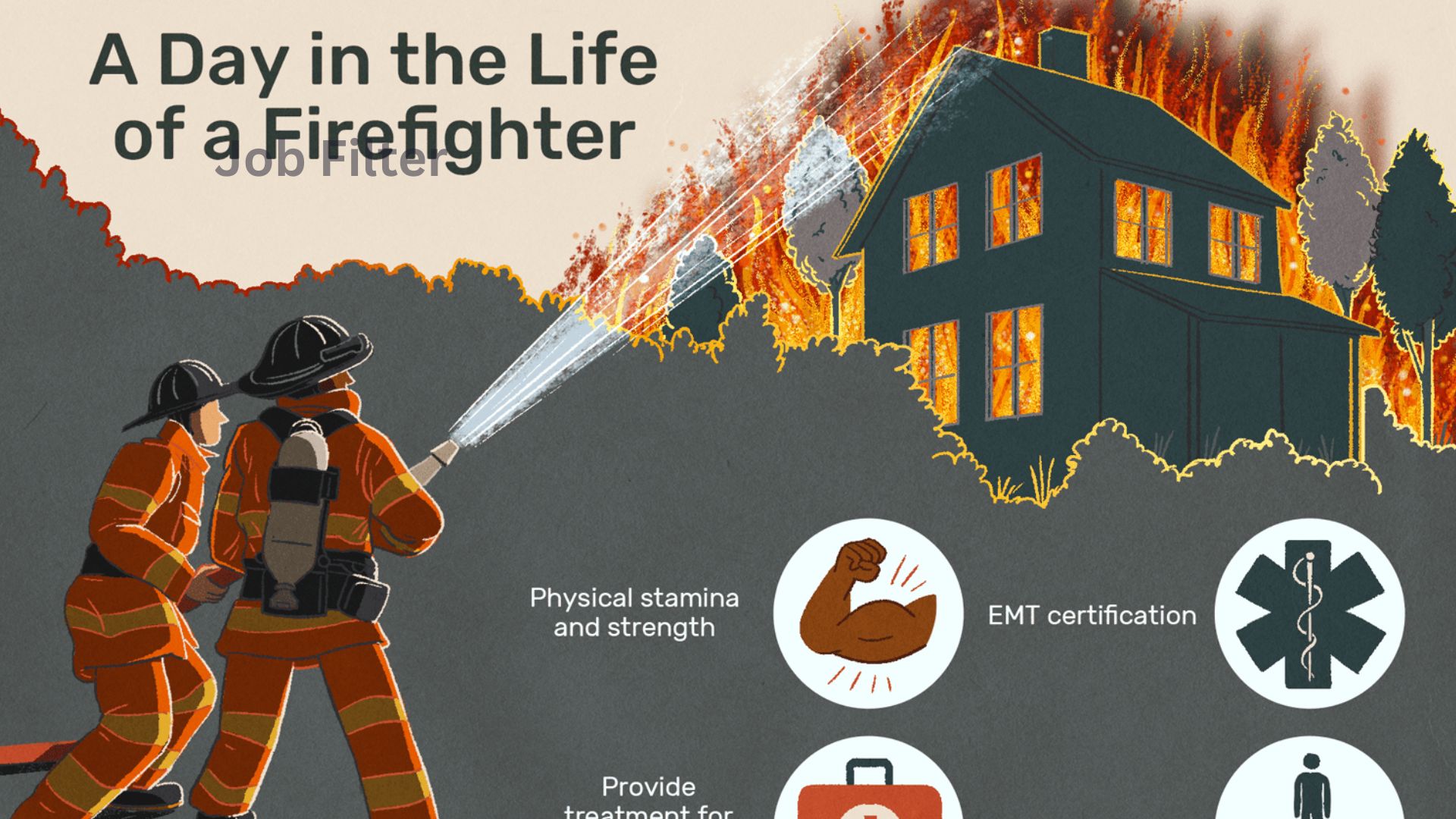
Firefighters are among the most respected professionals in any community. They are the first to arrive when danger strikes—pulling people from burning buildings, rescuing accident victims, and responding to medical emergencies. But being a firefighter is not just about bravery. It is a skilled, demanding, and rewarding career that requires physical strength, technical knowledge, and emotional resilience.
If you are searching for firefighter jobs, you are considering a path that offers job security, excellent benefits, early retirement options, and the genuine satisfaction of saving lives. Every year, thousands of firefighter positions open up in municipal departments, airports, industrial plants, and wildland agencies worldwide.
This comprehensive guide covers everything you need to know about firefighter careers. From duties and salary expectations to training requirements and interview tips, you will find all the information to start your journey toward becoming a firefighter.
What Are Firefighter Jobs?
Firefighter jobs are public safety positions responsible for responding to emergencies involving fires, medical incidents, hazardous materials, natural disasters, and rescue operations. Firefighters work for city fire departments, county governments, airports, industrial facilities, and federal land management agencies.
The primary goal of a firefighter is to protect life, property, and the environment. This includes extinguishing fires, providing emergency medical care, conducting fire prevention inspections, and educating the public about fire safety.
Firefighting is a shift-based career. Most firefighters work 24-hour shifts followed by 48 or 72 hours off. This schedule allows fire stations to be staffed around the clock. While the job is physically demanding and emotionally stressful, it also offers deep camaraderie, respect from the community, and a sense of purpose that few other careers can match.
Duties and Responsibilities of a Firefighter
Firefighters do much more than fight fires. Their daily responsibilities include:
- Responding to emergencies: Answering 911 calls for fires, medical incidents, car accidents, and hazardous material spills.
- Extinguishing fires: Using hoses, extinguishers, foam, and specialized equipment to control and put out structural, vehicle, and wildland fires.
- Providing emergency medical care: Many firefighters are trained as Emergency Medical Technicians (EMTs) or paramedics. They administer CPR, stop bleeding, treat shock, and stabilize patients before ambulance transport.
- Conducting search and rescue: Entering burning or collapsed structures to locate and evacuate trapped victims.
- Performing fire prevention inspections: Checking businesses, schools, and apartment buildings for fire code violations. Installing smoke detectors.
- Maintaining equipment: Cleaning, testing, and repairing hoses, ladders, pumps, breathing apparatus, and vehicles.
- Physical training: Firefighters must maintain peak physical fitness. Daily workouts are part of the job.
- Training and drills: Practicing rescue techniques, using new equipment, and reviewing emergency protocols.
- Public education: Teaching school children and community groups about fire safety, evacuation plans, and stop-drop-roll.
- Writing reports: Documenting every incident, including injuries, property damage, and actions taken.
Types of Firefighter Jobs
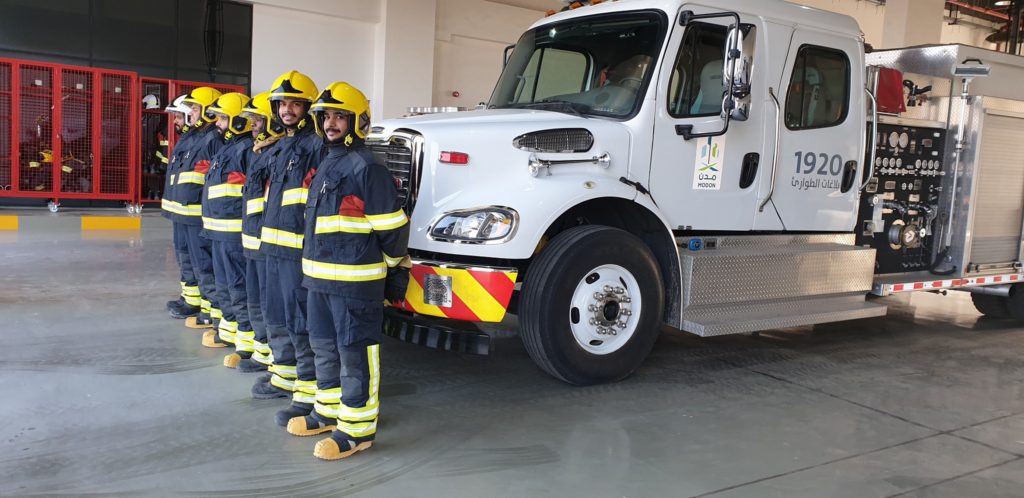
Not all firefighter jobs are the same. Here are the main types:
| Type | Work Environment | Primary Duties | Typical Employers |
|---|---|---|---|
| Municipal Firefighter | City or town fire stations | Structural fires, medical emergencies, car accidents, rescue calls | City fire departments |
| Wildland Firefighter | Forests, grasslands, remote areas | Wildfire suppression, creating fire breaks, prescribed burns | U.S. Forest Service, BLM, state forestry departments |
| Airport Firefighter | Commercial and military airports | Aircraft crash rescue, fuel fire suppression, passenger evacuation | Airport authorities, military bases |
| Industrial Firefighter | Factories, refineries, power plants | Chemical fires, confined space rescue, hazardous material response | Private companies (oil, gas, manufacturing) |
| Volunteer Firefighter | Rural and small-town stations | Same as municipal (but unpaid or stipend) | Volunteer fire departments |
Municipal Firefighter
The most common type. Municipal firefighters work for city or town governments. They respond to all types of emergencies within city limits. Most entry-level fire department jobs are municipal.
Wildland Firefighter
Wildland firefighters battle forest and brush fires, often in remote locations for weeks at a time. The work is seasonal (summer fire season) and extremely physically demanding. They use hand tools (shovels, Pulaskis) and chainsaws more than hoses.
Airport Firefighter
Airport firefighters specialize in aircraft rescue and firefighting (ARFF). They use high-capacity foam trucks to quickly suppress jet fuel fires. They must train for mass casualty evacuations. These airport firefighter jobs require additional ARFF certification.
Industrial Firefighter
Industrial firefighters work at chemical plants, oil refineries, power stations, and manufacturing facilities. They handle hazardous materials, confined space rescues, and high-pressure gas fires. Employers often require Hazardous Materials (HazMat) certification.
Volunteer Firefighter
In rural areas with small populations, volunteer firefighters protect their communities without a full-time salary. They receive a small stipend per call or annual honorarium. Many career firefighters start as volunteers to gain experience.
Skills Required for Firefighter Jobs
To succeed in firefighter employment, you need a mix of hard and soft skills.
Hard Skills (Technical):
- Fire suppression techniques (structural, wildland, aircraft)
- Emergency medical care (CPR, AED, first aid, EMT/paramedic)
- Operating pumps, hoses, ladders, and rescue tools
- Using self-contained breathing apparatus (SCBA)
- Hazardous materials identification and containment
- Vehicle extrication (cutting car roofs, doors)
- Rope rescue and confined space entry
Soft Skills (Personal):
- Teamwork: Firefighting is a team sport. You must trust and support your crew.
- Communication: Clear radio communication and calm instructions to victims.
- Problem-solving: Every fire is different. You adapt quickly.
- Stress management: Remaining calm while entering a burning building.
- Empathy: Comforting frightened or injured people.
- Discipline: Following orders and protocols without hesitation.
- Physical endurance: Working for hours in heavy gear under extreme heat.
Educational Requirements
Unlike many careers, firefighting does not require a college degree. However, education helps you stand out.
Minimum requirement: High school diploma or GED.
Preferred (but not mandatory):
- Associate degree in Fire Science (2 years)
- Bachelor’s degree in Emergency Management, Public Safety, or Fire Science (4 years)
What you learn in fire science programs:
- Fire behavior and combustion
- Building construction for firefighters
- Fire prevention and inspection
- Hazardous materials chemistry
- Emergency medical care
- Fire department administration
Alternative path: Many firefighters enter without a degree. They gain certifications (EMT, HazMat, Firefighter I & II) through fire academies and on-the-job training.
Physical Fitness Requirements
Firefighter jobs are among the most physically demanding in the world. You must pass a Candidate Physical Ability Test (CPAT) or similar exam.
Typical CPAT events (timed, usually under 10 minutes):
- Stair climb: Climb stairs for 3 minutes wearing a 75-pound vest (simulates climbing to a high floor with gear).
- Hose drag: Drag a charged fire hose 100 feet, then pull it toward you hand-over-hand.
- Equipment carry: Carry two saws (total 60+ pounds) for 100 feet.
- Ladder raise and extension: Remove a roof ladder from the truck, raise it, and extend it.
- Forcible entry: Swing a 10-pound sledgehammer to move a steel beam 5 feet.
- Search crawl: Crawl through a darkened tunnel (simulates searching for victims under smoke).
- Rescue drag: Grab a 165-pound mannequin and drag it 70 feet.
- Ceiling breach and pull: Repeatedly push and pull a 60-pound apparatus overhead.
How to prepare:
- Run or row 30 minutes, 3–4 times per week.
- Lift weights (focus on squats, deadlifts, pull-ups, push-ups).
- Use a stair climber or stadium stairs with a weighted vest.
- Practice with a sledgehammer on a tire.
Firefighter Training and Certifications
Before you can apply for government firefighter jobs, you need specific certifications. Requirements vary by country and department, but these are the most common:
| Certification | Typical Hours | Description |
|---|---|---|
| CPR / AED | 4–8 hours | Adult/child/infant CPR, using an automated external defibrillator |
| First Aid | 8–16 hours | Basic wound care, bleeding control, shock management |
| Emergency Medical Technician (EMT) | 150–200 hours | Advanced medical skills: airway, oxygen, splinting, epinephrine |
| Firefighter I | 200–300 hours | Basic fire suppression, hose handling, ladder operations, SCBA |
| Firefighter II | 150–200 hours | Advanced structural firefighting, rescue techniques, fire investigation |
| Hazardous Materials (HazMat) Operations | 40–80 hours | Identifying and containing chemical spills, decontamination |
| Wildland Firefighter (NWCG) | 40 hours | Basic wildland fire suppression, fire shelter deployment |
Where to get training:
- Local community colleges (fire science programs)
- State fire academies
- Online + in-person hybrid courses (CPR, HazMat awareness)
How to Become a Firefighter
Follow this step-by-step roadmap:
Step 1: Earn a high school diploma or GED.
Step 2: Obtain CPR, First Aid, and EMT certification (minimum EMT-Basic).
Step 3: Obtain Firefighter I and Firefighter II certification (through a fire academy or community college).
Step 4: Meet physical fitness requirements. Start training for CPAT.
Step 5: Gain experience as a volunteer firefighter or intern (many departments require 6–12 months volunteer experience).
Step 6: Prepare your resume and gather certifications.
Step 7: Monitor fire department recruitment announcements (city websites, government job portals).
Step 8: Apply to multiple departments. Do not apply to only one.
Step 9: Pass the written exam (tests math, reading comprehension, mechanical reasoning).
Step 10: Pass the CPAT physical ability test.
Step 11: Pass the oral board interview (panel of chiefs and captains).
Step 12: Pass a background check, psychological evaluation, and medical exam (including drug screen).
Step 13: Complete the fire department’s own training academy (if hired as a recruit).
Step 14: Pass probation period (usually 12–18 months).
Firefighter Recruitment Process
The hiring process for firefighter vacancies is competitive. Often 500–1,000 applicants compete for 10–20 positions.
Typical timeline: 4–12 months from application to job offer.
Stages:
- Application submission: Online application + resume + certifications.
- Written exam: Multiple-choice. Covers math, reading comprehension, map reading, mechanical aptitude, and situational judgment. Passing score is usually 70–80%.
- Physical ability test (CPAT or department-specific): Pass/fail. You must complete all events within the time limit.
- Oral board interview: 3–5 fire officers ask scenario-based questions (see next section).
- Chief’s interview: Final interview with the fire chief or deputy chief.
- Background investigation: Criminal history, driving record, credit check, reference calls.
- Psychological evaluation: Written tests and interview with a psychologist. Ensures you can handle stress.
- Medical exam: Vision, hearing, lung function, drug screening, physical exam.
- Conditional job offer: You are hired pending successful academy completion.
- Fire academy: 12–24 weeks of intense training (physical, classroom, live fire).
- Probation: 12–18 months of supervised duty. You can be terminated for poor performance.
Firefighter Interview Questions and Tips
Common questions:
- “Why do you want to be a firefighter?”
- “Tell us about a time you worked as part of a team to solve a problem.”
- “How do you handle stressful or traumatic situations?”
- “What do you know about our department?”
- “Describe a time you made a mistake. What did you learn?”
- “How do you stay physically fit?”
- “Why should we hire you over other candidates?”
- “A fellow firefighter is acting unsafely. What do you do?”
- “What are your long-term career goals?”
- “How do you handle criticism?”
Sample answer (Question 1):
“I want to be a firefighter because I want to serve my community in a meaningful way. I have always been drawn to jobs that require physical fitness, teamwork, and helping others. After volunteering at my local fire station for six months, I saw how firefighters make a real difference every day. I want to be part of that tradition.”
Tips:
- Research the department’s history, size, and recent incidents.
- Wear a suit or professional attire (not firefighter gear).
- Use the STAR method (Situation, Task, Action, Result) for behavioral questions.
- Be honest. Do not exaggerate your experience.
- Ask intelligent questions at the end: “What does success look like for a recruit in your department?”
Firefighter Salary by Country
Firefighter salaries vary significantly by country, cost of living, and experience level. All figures are annual gross salary (before taxes) in USD.
| Country | Entry-Level (0–2 years) | Experienced (5–10 years) | Senior (10+ years / Captain) |
|---|---|---|---|
| United States | $40,000 – $55,000 | $60,000 – $80,000 | $85,000 – $120,000+ |
| Canada | $45,000 – $60,000 (CAD) | $70,000 – $90,000 (CAD) | $95,000 – $130,000 (CAD) |
| United Kingdom | £25,000 – £30,000 | £35,000 – £45,000 | £50,000 – £65,000 |
| Australia | AUD 60,000 – 75,000 | AUD 85,000 – 105,000 | AUD 110,000 – 150,000+ |
| UAE (Dubai, Abu Dhabi) | AED 120,000 – 180,000 | AED 200,000 – 280,000 | AED 300,000 – 400,000+ |
Note: US firefighters in high-cost states (California, New York, New Jersey) earn more. Wildland federal firefighters earn less (approx. $35,000 – $55,000).
Benefits of Working as a Firefighter
Beyond salary, firefighter jobs offer exceptional benefits:
- Job security: Firefighting is essential government service. Layoffs are rare.
- Early retirement: Many firefighters retire after 20–25 years with a pension (50–80% of salary).
- Health insurance: Excellent medical, dental, and vision coverage (often free or low-cost).
- Paid leave: Vacation days, sick leave, holidays. Some departments offer sabbaticals.
- Overtime pay: Additional shifts are often available at 1.5x or 2x hourly rate.
- Disability and life insurance: Line-of-duty disability coverage.
- Training and education: Departments pay for advanced certifications and degrees.
- Respect and community status: Firefighters are consistently rated as the most trusted profession.
- Variety: No two days are the same. You might fight a fire, deliver a baby, or rescue a cat.
- Physical fitness: You are paid to work out (daily fitness time is built into the shift).
Challenges of Firefighter Jobs
The job is not for everyone. Be aware of the challenges:
- Physical danger: Burns, smoke inhalation, collapsing structures, explosions, traffic incidents.
- Emotional trauma: Witnessing death, child victims, suicides, mass casualty events.
- Shift work: Working nights, weekends, and holidays. Disrupted sleep schedule.
- Missed family events: Birthdays, holidays, school plays while on shift.
- Health risks: Higher rates of cancer (from smoke), heart disease, hearing loss, PTSD.
- Competitive hiring: Thousands of applicants for few positions. Many try for years.
- Long probation: You can be fired without appeal during first 12–18 months.
- Low starting pay: Entry-level salary may be low relative to the danger.
Career Growth and Promotion Opportunities
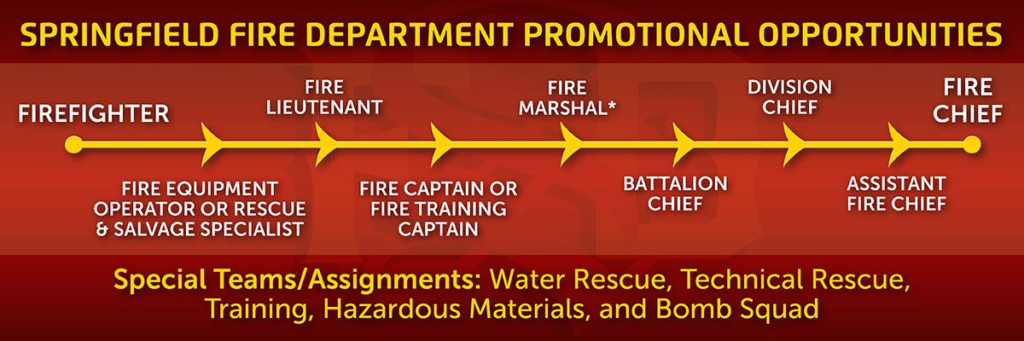
Firefighting offers a clear promotion ladder:
| Rank | Typical Experience | Responsibilities |
|---|---|---|
| Probationary Firefighter / Recruit | 0–18 months | Learning, training, basic duties under supervision |
| Firefighter | 18 months – 5 years | Full firefighting duties, may drive apparatus, mentor recruits |
| Firefighter / Paramedic | 2+ years (plus paramedic cert) | Advanced medical response, leads medical incidents |
| Engineer / Driver / Operator | 5–8 years | Drives and operates fire pumps, aerial ladders |
| Lieutenant | 8–12 years | Supervises a crew of 3–5 firefighters on one apparatus |
| Captain | 12–18 years | Supervises a station, multiple crews, incident command |
| Battalion Chief | 15–20+ years | Supervises multiple stations, commands large incidents |
| Deputy Chief / Assistant Chief | 20+ years | Department administration, budgeting, policy |
| Fire Chief | 20+ years | Entire department command, reports to city manager or mayor |
How to get promoted:
- Earn advanced certifications (Fire Officer I–IV, Incident Commander)
- Obtain a bachelor’s degree in Fire Science or Public Administration
- Score well on promotional exams (written and practical)
- Demonstrate leadership as a union representative or training officer
Firefighter Jobs for Fresh Candidates
You can become a firefighter with no prior experience. Many large departments hire entry-level recruits and train them from scratch.
What “fresh candidate” means:
- No fire experience required
- No EMT certification required (though strongly preferred)
- No volunteer firefighting background needed
Departments that hire entry-level:
- Large cities (New York FDNY, Chicago CFD, Los Angeles LAFD)
- Some state fire academies (direct to recruit training)
- Federal wildland agencies (US Forest Service, Bureau of Land Management)
How fresh candidates stand out:
- Obtain EMT certification before applying (6-month evening program).
- Volunteer at a local fire station (even non-fire duties like cleaning equipment).
- Earn CPR/First Aid and Firefighter I (affordable community college courses).
- Excel on the written exam (study prep books).
- Achieve peak physical fitness (exceed CPAT minimums).
Government Firefighter Jobs
Government firefighter jobs offer the best pay, benefits, and job security.
Federal government (USA):
- U.S. Forest Service (wildland)
- Bureau of Land Management (wildland)
- National Park Service
- Department of Defense (military base fire departments)
- Apply via USAJOBS.gov
State government:
- State forestry departments
- State fire marshal offices
- State university fire departments
- Apply via state civil service websites
Local government (city/county):
- Most municipal fire departments
- Apply via city or county human resources websites
- Search for “firefighter civil service exam”
International government:
- Dubai Civil Defence (UAE)
- London Fire Brigade (UK)
- Fire and Rescue NSW (Australia)
- Apply via respective government portals
Firefighter Jobs in Airports and Industrial Facilities
Airport firefighter jobs (ARFF):
- Require ARFF certification (additional 40+ hours)
- Often better pay than municipal (but less overtime)
- Examples: LAX, JFK, Heathrow, Dubai International
- Apply directly to airport authorities or contract fire companies
Industrial firefighter jobs:
- Oil refineries (Exxon, Shell, BP)
- Chemical plants (Dow, DuPont)
- Power plants (nuclear, coal, gas)
- Manufacturing facilities (automotive, steel)
- Apply directly to private companies or contract firms (Ranger, HEM, SGI)
Contract firefighter jobs:
- Private companies hire firefighters for industrial sites
- Often require prior municipal experience
- May offer rotational schedules (2 weeks on, 2 weeks off)
International Firefighter Job Opportunities
Experienced firefighters can work abroad. Options include:
- Middle East (UAE, Qatar, Saudi): High salaries, tax-free, but require 3–5 years experience and US/UK/Canada certifications.
- Australia and New Zealand: Strong demand for wildland firefighters. Working holiday visa possible.
- US military bases overseas: Firefighter positions open to US citizens at bases in Europe, Asia, Middle East.
- Private contractors: Oil and gas facilities in remote locations (Africa, Central Asia, South America).
Visa requirements: Most countries require work sponsorship. Few accept foreign applicants without prior employment authorization.
Tips for Getting Hired as a Firefighter
- Get EMT certification before applying. Departments receive 1,000 applications for 20 positions. EMT certification cuts the candidate pool in half.
- Volunteer first. Rural volunteer departments are always recruiting. One year of volunteer experience makes you a top candidate.
- Take practice exams. Buy a “firefighter written exam study guide” and take 10+ practice tests.
- Train for CPAT beyond minimums. If the minimum stair climb is 3 minutes, train for 5 minutes with more weight.
- Apply everywhere. Do not limit yourself to one city. Apply to 20–30 departments over 1–2 years.
- Build a professional resume. List certifications, volunteer work, fitness achievements, and relevant jobs (construction, military, landscaping).
- Prepare for the background check. Be honest about past mistakes. Departments forgive old issues but not lies.
- Stay persistent. Many career firefighters applied for 2–5 years before being hired.
- Join the military reserves. Military service earns preference points on civil service exams (USA).
- Consider a paid fire academy. If you can afford it, self-sponsor through a fire academy. You graduate certified and ready to work.
Best Websites to Find Firefighter Jobs
| Website | Focus | Cost |
|---|---|---|
| USAJOBS.gov | Federal wildland and military base (US) | Free |
| GovernmentJobs.com | Municipal fire departments (US, Canada) | Free |
| FireRecruit.com | Firefighter-specific job board | Free |
| Indeed.com | General job board (filter by “firefighter”) | Free |
| Industrial and airport firefighter jobs | Free | |
| NationalFireFighterJobs.com | US and international fire jobs | Subscription ($) |
| Firehouse.com/jobs | Fire industry job board | Free |
| State civil service websites | State government fire jobs | Free |
| Local city websites | Municipal fire department recruitment | Free |
Frequently Asked Questions (FAQ)
1. Do I need a college degree to become a firefighter?
No. A high school diploma or GED is the minimum requirement. However, an associate or bachelor’s degree in fire science can help you get promoted faster.
2. What is the age limit for firefighter jobs?
Most departments require you to be at least 18 years old. Maximum age varies: many US departments have no upper limit, but some require you to start by age 35 or 36. Federal wildland firefighters have no age limit.
3. Can I become a firefighter with a criminal record?
It depends on the crime. Minor traffic violations and youthful misdemeanors are usually acceptable. Felonies (especially arson, theft, violence) disqualify you permanently. Be honest on your application.
4. Do female firefighters have equal opportunities?
Yes. Fire departments actively recruit women. Physical ability standards are the same for all genders. Many successful female firefighters serve as chiefs and captains.
5. How long does the hiring process take?
Typically 6–12 months from application to start date. Large departments with 1,000+ applicants can take 18 months.
6. Can I work as a firefighter in a different country?
Yes, but it is difficult. Most countries give priority to citizens. Exceptions: US military bases abroad, private contract firefighters for industrial sites, and reciprocal programs between Australia/New Zealand/Canada/UK/USA.
7. Do volunteer firefighters get paid?
Most volunteer departments offer a small stipend per call (e.g., $10–$25 per call) or an annual honorarium ($500–$2,000). Some provide free training and gear but no salary.
8. What is the difference between a firefighter and an EMT/paramedic?
Many firefighters are cross-trained as EMTs or paramedics. In some departments, all firefighters must be EMTs. In others, ambulance transport is handled by separate EMS agencies. Paramedic certification significantly increases your pay and hireability.
9. Is firefighting dangerous?
Yes. Line-of-duty deaths occur every year from cardiac events, burns, smoke inhalation, and traumatic injuries. However, modern equipment, training, and safety protocols have made the job much safer than 50 years ago.
10. Can I become a firefighter if I wear glasses or contact lenses?
Yes. Corrected vision (with glasses or contacts) to 20/20 in one eye and 20/40 in the other is usually acceptable. Some departments require uncorrected vision of 20/100 or better. Lasik surgery is allowed. Color blindness may disqualify you (cannot distinguish red/green emergency lights).
11. Do firefighters work every day?
No. Typical schedule: 24 hours on duty, then 48 or 72 hours off. That averages 8–10 24-hour shifts per month. Some departments work 48 hours on, 96 hours off.
12. What is the pass rate for the CPAT?
Approximately 50–70% pass on the first attempt. The stair climb is the most failed event. Practice with a weighted vest.
13. Can I become a firefighter if I am not a US citizen?
Permanent residents (green card holders) can work as firefighters in most US departments. Federal wildland jobs require US citizenship. Other countries have their own citizenship requirements.
14. Do firefighters get holidays off?
No. Fire stations are staffed 24/7/365. You work on a rotating schedule. One year you work Christmas; the next year you are off.
15. What is the dropout rate for fire academy recruits?
Approximately 10–30% of recruits fail or quit. The most common reasons: physical fitness failure, academic failure, or realizing the job is not for them.
Summary
Firefighter jobs offer a unique combination of public service, physical challenge, and lifelong camaraderie. While the hiring process is competitive and the job is dangerous, the rewards—job security, excellent benefits, early retirement, and genuine purpose—are unmatched.
To become a firefighter:
- Earn EMT certification (minimum)
- Complete Firefighter I & II training
- Achieve elite physical fitness
- Apply widely to municipal, airport, industrial, and wildland positions
- Prepare thoroughly for written exams, CPAT, and oral boards
- Consider volunteering first to gain experience
Firefighter salaries vary by country and experience, but even entry-level positions provide a solid middle-class income with exceptional benefits. Career progression leads to officer ranks and administrative roles for those who stay long-term.
If you are ready to serve your community, work with a close-knit team, and face challenges that most people run away from, start your firefighter career today. The first step is finding local volunteer opportunities and earning your EMT certification.
Conclusion
Becoming a firefighter is not easy. The application process is long. The competition is fierce. The physical demands are extreme. But for those who succeed, few careers offer the same sense of honor, purpose, and belonging.
Firefighters do not run away from danger—they run toward it. They carry people out of burning buildings. They cut crash victims out of twisted metal. They hold the hands of the frightened and the dying. And at the end of the shift, they go home knowing they made a difference.
Whether you pursue municipal, wildland, airport, or industrial firefighter jobs, you will join a brotherhood and sisterhood that spans the globe. Use the information in this guide to prepare your certifications, train your body, and apply with confidence.
Your future firehouse is waiting. Start today.